
Best Touriest places in Paris
1. Sacré-Coeur and Quartier Montmartre
Sitting at the best factor in Paris like an decorative ornament, the Basilique du Sacré-Coeur has a unique air of mystery. Its alabaster facade blends Romanesque and Byzantine styles, and from a ways away, it looks like a wedding cake (that's its nickname). in the Basilica, the putting mosaic of Christ with a flaming coronary heart offers the sanctuary an emotional and non secular intensity, becoming for a church that become created as a image of hope after the Franco-Prussian conflict. The sanctuary is illuminated with many candles, which give a contrast to the dark, somber area. traffic can spend time at the terrace admiring the perspectives of Paris or climb the tower for an excellent better perspective. The Esplanade that leads up (by way of a staircase of over 2 hundred steps) to the Sacré-Coeur church is a popular region for humans to hang out and is regularly lively via avenue musicians. while travelling the Sacré-Coeur, be sure to discover the captivating neighborhood of Montmartre. This medieval country village (once taken into consideration outdoor of the metropolis) has grow to be annexed as the 18th arrondissement of Paris. Montmartre exudes a charm together with an avant-garde area. Winding cobblestone streets and pedestrian staircases result in small regionally owned boutiques and restaurants, art galleries that evoke the region's bohemian beyond, and quiet squares packed with outside cafés. at some stage in the Belle Epoque, the village of Montmartre commenced to draw artists along with Henri de Toulouse-Lautrec and Edgar Degas. The Bohemian creative spirit of Montmartre continues to be observed here, particularly around the area du Tertre and the Carré Roland Dorgelès. The community has numerous wonderful artwork museums, in which site visitors can recognize the creations of bohemian artists who resided in Montmartre throughout the late 19th and early twentieth century. in the course of this era, Montmartre was well-known for its cabarets and artists' studios. The Musée de Montmartre (12 Rue Cortot) occupies a ancient residence where Auguste Renoir, Raoul Dufy, Suzanne Valadon, and other artists as soon as lived and labored. inside the museum's pleasant gardens, visitors can enjoy refreshments at the Café Renoir, which functions outside seating in the lovable space wherein Renoir painted numerous masterpieces. folks that admire surrealistic artwork could be enthralled by the Dalí Paris museum (eleven Rue Poulbot). This revolutionary museum displays more than 300 works created by means of Salvador Dalí. The famous are offered in a manner that reveals the symbols and motifs utilized in his artistic endeavors.
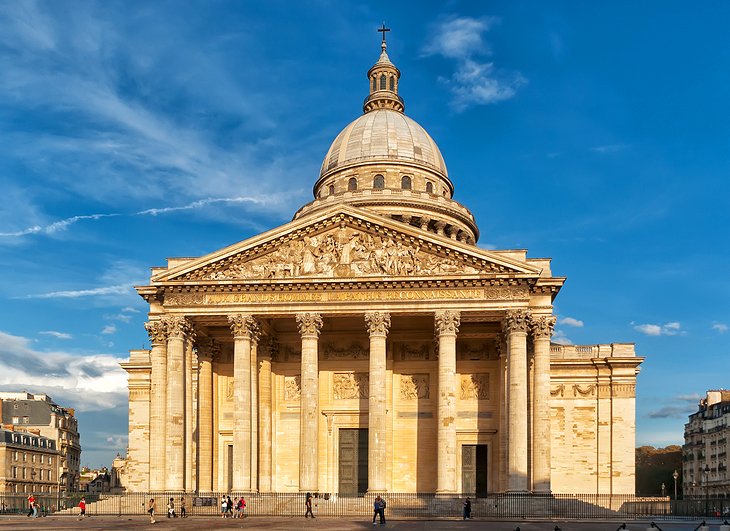
2. Panthéon
3. Musée Rodin
A hidden gem in the posh seventh arrondissement, the Musée Rodin invites traffic to step right into a non violent haven of refinement, wherein France's famend sculptor lived and worked for decades. The assets includes the 18th-century Rococo mansion, the Hôtel Biron, and a seven-acre Sculpture lawn that blooms with flora for the duration of the 12 months. In 1908, Auguste Rodin started to lease several rooms at the floor ground of the Hôtel Biron to use as an atelier. different artists, which includes Jean Cocteau, Henri Matisse, and Isadora Duncan, also rented rooms within the building. Rodin later took over the entire Hôtel Biron, which became his area of residence for the rest of his life. In 1916, Rodin donated his artistic endeavors and series of antiquities to the French nation, and the museum become set up quickly thereafter. The Musée Rodin shows a incredible assortment of Rodin's sculptures, in addition to the works of Camille Claudel. visitors can recognize Rodin masterpieces presented within the Hôtel Biron, which includes Danaïd, an expressive marble sculpture depicting a mythological character (created in 1890); The Age of Bronze (created in 1877); The Cathedral, a stone sculpture of two intertwined hands (created in 1908); and The Kiss, one in all Rodin's maximum sensual works (created around 1882). numerous enormous Rodin sculptures preside over various corners of the Sculpture lawn. The thinker, Rodin's most iconic paintings of art, sits on a pedestal overlooking the perfectly manicured formal garden. The expressive Monument to Balzac stands in a shady spot under leafy bushes, at the same time as a bronze statue of Adam is sheltered at the back of dense shrubbery. site visitors will revel in wandering the lawn to comprehend each the sculptures and the landscaping. The tranquil placing makes the Musée Rodin unique in Paris. including to the romance of the area are the park benches located all through the lawn and the café-restaurant, L'Augustine, wherein visitors may additionally loosen up on an outside terrace. The café-restaurant additionally has a comfy indoor space. The menu capabilities classic French meal options, as well as desserts supplied by means of the Maison Lenôtre, a pillar of Parisian gastronomy famend for its cutting-edge artisanal pâtisserie.
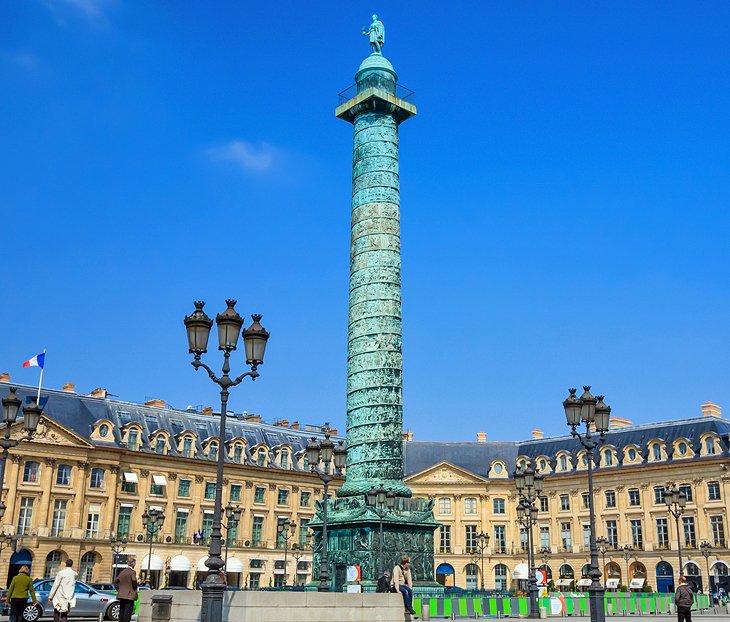
4. Place Vendôme
5. Hôtel National des Invalides
Louis XIV based the Hôtel Royal des Invalides inside the late 17th century as a domestic for disabled infantrymen. before the time of Louis XIV, disabled infantrymen received hospital treatment, if in any respect, in hospitals or monasteries, but have been usually reduced to begging. With the Hôtel des Invalides, Louis XIV created the first home for disabled veterans. The building became built between 1671 and 1676 beneath the course of the architect Libéral Bruant and targeted on the Eglise Saint-Louis-des-Invalides, which changed into later redesigned by means of the architect Jules Hardouin-Mansart in 1706. The church became called the Eglise du Dôme des Invalides and is an outstanding instance of French classical-fashion ecclesiastical architecture. nowadays, the Hôtel national des Invalides nevertheless has a hospital (organization Nationale des Invalides) that gives scientific care for disabled veterans. The constructing additionally carries three museums and churches. founded in 1794, the Musée de l'Armée (army Museum) affords a large collection of army system and uniforms, weapons, prints, and curiosities from many countries. The museum covers the navy history of France from the 13th century (the Crusades) to the 17th century. There are also mementos and relics of Napoleon and generals, in addition to plans of the French campaigns. The Musée de l'Ordre de la Libération honors the infantrymen who fought for the liberation of France for the duration of the second one global struggle, from 1940 to 1945. This museum also educates site visitors approximately the deportation of Jews from France, the Resistance, and existence in France all through the warfare. military method of the seventeenth century involves existence on the Musée des Plans-Reliefs (Museum of comfort Maps). The museum presentations 28 unique relief maps of France's fortified cities (citadels) that date from 1668 to 1875. Louis XIV's Minister of warfare (and later ministers) used the maps for army planning functions. A gold-domed Neoclassical church, the Eglise du Dôme des Invalides was built in 1677 as a royal chapel for Louis XIV however is maximum well-known for being the website of Napoleon's Tomb, established right here in 1861 through the orders of King Louis-Philippe. The imperial tomb stands below a impressive cupola, which became painted by means of Charles de l. a. Fosse. Designed as an area for veterans to worship, the Eglise Saint-Louis des Invalides (built around 1676) is a chapel within the Eglise du Dôme des Invalides. This chapel become constructed in step with etiquette of the 17th century and has a separate front from Eglise du Dôme. The Eglise Saint-Louis des Invalides remains used as a church for veterans of the French military. deal.


No comments:
Post a Comment